How a Fake CAPTCHA Nearly Compromised an IIS Server
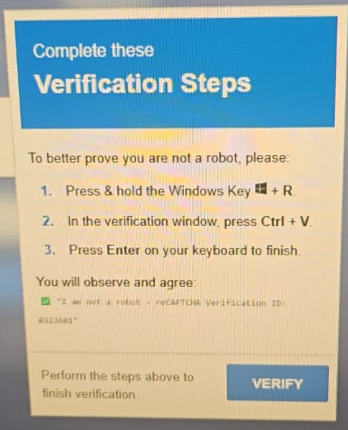
Most cyberattacks don't start with a sophisticated exploit. Sometimes, they begin with a simple message:
"Verify you're human. Press Win + R, Ctrl + V, and Enter."
A Windows Server administrator followed these instructions on an internet-facing IIS server.
Within minutes, the following indicators appeared:
• Suspicious processes such as setupdownloader.exe and Installer.exe
• Malware attempted to establish persistence inside IIS
• Bitdefender detected and removed a malicious DLL:
C:\Windows\System32\inetsrv\StaticSupportModule.dll
• IIS stopped functioning, resulting in HTTP 503 – Service Unavailable
Investigation Performed
Our incident response included:
✅ Process analysis
✅ Network connection review
✅ PowerShell forensic analysis
✅ Windows Event Log investigation
✅ IIS configuration review
✅ Malware persistence checks
During the investigation, we found that the IIS configuration was still attempting to load the malicious DLL, causing the web service to fail after the antivirus removed the file.
Immediate Response
✔ Isolated the affected server
✔ Preserved forensic evidence
✔ Reviewed PowerShell execution history
✔ Investigated scheduled tasks and persistence
✔ Checked IIS native modules
✔ Began credential rotation
✔ Initiated a complete malware scan
Lessons Learned
This incident wasn't caused by an unpatched vulnerability.
- It was caused by social engineering.
- Attackers increasingly rely on fake CAPTCHA (also known as ClickFix) pages that trick users into executing malicious commands themselves.
- No exploit.
- No vulnerability.
- Just a few keyboard shortcuts.
Key Takeaways
• Never follow instructions asking you to run commands from a website.
• Disable unnecessary PowerShell execution where possible.
• Enable endpoint detection and response (EDR/XDR).
• Continuously monitor PowerShell and Windows Event Logs.
• Implement application allow-listing for administrative systems.
• Regularly review IIS modules and server integrity.
• Train administrators to recognize modern social engineering techniques.
Cybersecurity isn't only about blocking hackers.
It's about preventing attackers from convincing trusted users to execute malicious code.
At Cloud Patrons Info Solutions, we help organizations respond to security incidents, perform digital forensics, secure cloud infrastructure, and strengthen defenses against modern cyber threats.



Cloud Patrons Info Solutions is a prominent support provider, offering a wide spectrum of IT services. Our expertise includes Managed Cloud & Infrastructure Support, PCI DSS Implementation & Certification, and round-the-clock NOC & IT Help Desk services for a global clientele. We excel in delivering 24/7 support through various channels, serving valued customers across the globe in industries such as FinTech, Logistics, and Software. Experience top-tier support outsourcing with us.