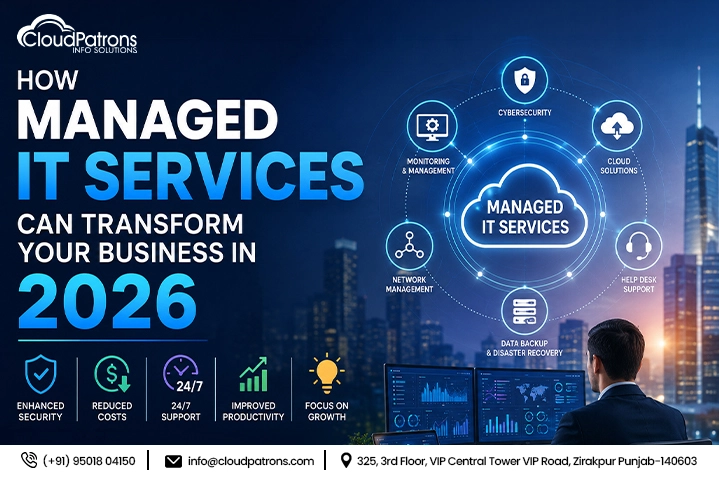
Managed IT services transform businesses by shifting IT operations from reactive, in-house firefighting to proactive, outsourced management — typically reducing downtime, controlling technology costs through predictable monthly pricing, and freeing internal staff to focus on core business goals rather than troubleshooting. Companies that adopt managed IT services commonly see improvements in cybersecurity posture, system uptime, and IT budget predictability within the first 6–12 months. The transformation is measurable in three areas: cost structure, operational resilience, and strategic capacity.
At Cloud Patrons Info Solutions, we've watched this transformation play out repeatedly across fintech, payments, and enterprise clients in 15+ countries — and the pattern is consistent. It's rarely a single dramatic fix. It's a maturity shift: from constantly reacting to problems, to preventing them, to eventually using IT as a lever for business decisions. This guide walks through how that shift actually happens, what it changes measurably, and — just as importantly — what it doesn't solve.
What "IT Transformation" Actually Means (And Why Most Businesses Get It Wrong)
Most businesses hear "IT transformation" and think it means outsourcing the help desk. It doesn't. Transformation means moving through three distinct stages of operational maturity:
- Reactive — IT exists to fix things after they break. No monitoring, no forward planning, constant firefighting.
- Managed — Proactive monitoring, patching, and support prevent most incidents before they impact the business. IT becomes predictable.
- Strategic Partner — IT is no longer just infrastructure upkeep; it actively informs business decisions — architecture choices, compliance posture, and growth planning are made with IT input, not after the fact.
Managed IT services aren't just a help desk with a bigger phone tree. Real scope includes continuous monitoring, cybersecurity operations, strategic planning, and vendor management — the full operational layer beneath the business, not just the ticket queue on top of it.
The Core Benefits of Managed IT Services
Managed IT services deliver four measurable business benefits: predictable IT costs, reduced downtime, stronger cybersecurity, and access to specialized expertise without full-time hiring costs.
Cost Predictability and Reduced Overhead
A flat-fee or subscription pricing model replaces the unpredictable swings of in-house IT — emergency repairs, sudden hardware failures, and one-off consulting fees that show up exactly when budgets are tightest. Compare hiring a single in-house IT generalist against an MSP contract that includes helpdesk, a dedicated security analyst, and a network engineer for a similar or lower combined cost. The generalist can keep systems running day to day; they can't realistically also run security operations and infrastructure planning at a specialist level. The MSP model doesn't just cost less on paper — it buys coverage a single hire structurally can't provide.
Minimized Downtime and Faster Issue Resolution
Proactive monitoring tools (RMM — remote monitoring and management — software) catch failing hardware, unusual network behavior, or resource exhaustion before they cause an outage. Downtime is expensive for any business, and disproportionately so for SMBs that lack the redundancy larger enterprises build in. SLA-backed response times turn "we'll look into it" into a measurable commitment — a tiered response window for critical incidents you can actually hold a provider to, instead of hoping ad hoc support gets to you before customers notice.
Access to Specialized Expertise On-Demand
Most SMBs carry the same skill gaps: cloud architecture, regulatory compliance, and cybersecurity are rarely covered well by a small internal team. This is the "bench strength" argument again — a single MSP contract gives you access to a full team of specialists, not one generalist wearing every hat. For a business handling payment data or operating under PCI DSS, HIPAA, or SOC 2 requirements, that specialist coverage isn't a nice-to-have, it's the difference between passing an audit and scrambling before one.
Scalability Without Rehiring or Retraining
MSP contracts flex with the business. A company doubling headcount in six months, opening a new office, or going through an acquisition doesn't need to double its internal IT staff in lockstep — the managed services layer absorbs the added load, onboarding new devices and accounts on a timeline that matches the business, not a recruiting cycle.
Cybersecurity as a Business Transformation Driver
Cybersecurity has moved from an IT concern to a board-level business risk. A breach doesn't just cost recovery time — it costs customer trust, regulatory standing, and in payment-adjacent industries, potentially the ability to keep operating at all. Small and mid-sized businesses are targeted at a rate disproportionate to their size, in large part because attackers assume — often correctly — that they carry weaker security operations than larger enterprises.
Layered security services under a managed IT model typically include:
- 24/7 monitoring and alerting
- Patch management across endpoints and servers
- Endpoint detection and response
- Employee phishing and security-awareness training
- Documented incident response planning
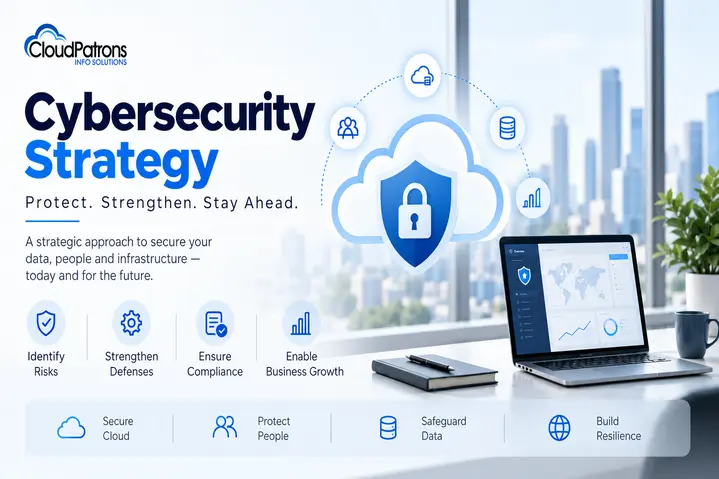
It's worth distinguishing managed IT services from managed security services (MSSP): the two overlap significantly, but a pure MSSP focuses narrowly on security operations, while managed IT covers the broader infrastructure and support layer with security built in as one pillar among several. At Cloud Patrons, cybersecurity and compliance — including PCI DSS implementation for payment platforms — sit inside our managed IT and cloud support model rather than as a bolted-on extra, because for the fintech clients we work with, security posture and operational uptime are the same conversation.
How to Align IT Services With Business Goals
Aligning IT with business goals requires mapping technology investments directly to revenue, efficiency, or risk-reduction objectives — typically done through a technology roadmap reviewed quarterly with business leadership, not just IT staff.
Step 1 — Conduct a Technology-to-Goals Audit
Start with a simple internal exercise: list your top three business goals for the next 12 months — growth, compliance, geographic expansion, whatever they are — then list which current systems support each one, and which ones actively block it. This single exercise surfaces more useful priorities than most formal IT audits, because it starts from the business outcome rather than the tech inventory.
Step 2 — Build a Joint IT/Business Roadmap
Quarterly business reviews (QBRs) are the mechanism a good MSP uses to keep IT priorities aligned as business priorities shift. A roadmap built in January needs to flex when the company opens a second location in April or shifts to hybrid work in July — a static IT plan reviewed once a year can't keep pace with that. This is also where the "Strategic Partner" maturity stage becomes real: IT isn't reacting to a decision the business already made, it's in the room when the decision is being made.
Step 3 — Revisit and Re-Prioritize as the Business Changes
Alignment isn't a one-time project — it's a recurring discipline. The businesses that get the most value from managed IT treat the QBR as a standing checkpoint, not a formality: what changed last quarter, what's changing next quarter, and does the technology roadmap still match where the business is actually headed.
A Self-Diagnostic: Do You Need Managed IT Services Now?
Before committing, ask honestly:
- Is your current IT support reactive — do problems get fixed only after someone notices something's broken?
- Does your team lack after-hours or weekend coverage for critical systems?
- Are you handling regulated data (payments, health records, personal data) without dedicated compliance support?
- Has IT spending been unpredictable or spiked unexpectedly in the last 12 months?
- Is your growth trajectory outpacing your internal IT team's capacity to keep up?
Two or more "yes" answers generally indicate a business has moved past the point where informal, in-house-only IT support is sustainable.
What Transformation Does NOT Solve
Honesty matters here, because most content on this topic overstates the case. Managed IT services will not fix a fundamentally broken company culture around technology adoption, nor will they retroactively repair years of undocumented, poorly architected legacy systems overnight — that kind of remediation takes real project time, even with a strong MSP in place. Managed services also won't replace the need for business leadership to make technology-informed decisions; a good MSP brings the roadmap and the expertise, but alignment still requires business stakeholders showing up to those quarterly reviews. And no provider can promise zero downtime or zero risk — the honest claim is measurably reduced risk and faster recovery, not elimination of every possible failure.
Conclusion
The real transformation managed IT services offer isn't a single benefit — it's a shift in operational maturity, from constantly reacting to problems, to preventing them, to eventually using IT as a genuine input into business strategy. The businesses that see the clearest results are the ones that treat this as a structured process: auditing where technology currently supports or blocks their goals, building a roadmap reviewed regularly with business leadership, and choosing a provider who can back up SLA promises with real compliance and security depth.
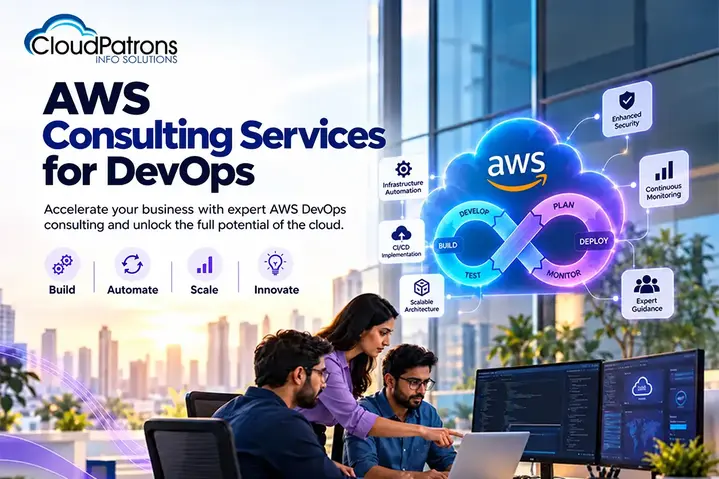
That's the model Cloud Patrons Info Solutions builds every client relationship around — managed cloud support, 24×7 NOC monitoring, PCI DSS compliance, DevOps, and cybersecurity operations delivered as one coordinated partnership across 15+ countries. If your IT is still stuck in reactive mode, book a free consultation and we'll help you map out what the next stage of that transformation actually looks like for your business. Also visit us on google.
FAQ
Managed IT Services are outsourced IT solutions that include proactive monitoring, cybersecurity, cloud management, technical support, and infrastructure maintenance to keep business systems secure and efficient.
Managed IT Services replace unpredictable IT expenses with fixed monthly pricing, reduce downtime, prevent costly security incidents, and provide access to expert IT professionals without hiring a full in-house team.
As businesses increasingly rely on cloud technologies, remote work, and digital operations, Managed IT Services help improve cybersecurity, ensure compliance, enhance scalability, and support long-term business growth.
If your business experiences frequent IT issues, lacks 24/7 support, struggles with cybersecurity or compliance, or faces unpredictable IT costs, Managed IT Services can provide the expertise and proactive support needed to improve operations.
Cloud Patrons Info Solutions is a prominent support provider, offering a wide spectrum of IT services. Our expertise includes Managed Cloud & Infrastructure Support, PCI DSS Implementation & Certification, and round-the-clock NOC & IT Help Desk services for a global clientele. We excel in delivering 24/7 support through various channels, serving valued customers across the globe in industries such as FinTech, Logistics, and Software. Experience top-tier support outsourcing with us.