Accepting online payments has become easier than ever. Building a secure payment environment is another story.
As businesses continue expanding across cloud platforms, digital payment channels, and third-party integrations, protecting payment card data has become a critical business responsibility. Whether you're launching an eCommerce platform, scaling a FinTech application, or modernizing enterprise infrastructure, implementing the Payment Card Industry Data Security Standard (PCI DSS) is essential for reducing cyber risks and meeting industry expectations.
Many organizations assume PCI DSS implementation is simply a technical project. In reality, it affects technology, business processes, governance, employee access, documentation, and continuous monitoring. It requires collaboration between IT, security, compliance, operations, and leadership teams.
The challenge isn't understanding what PCI DSS requires—it's implementing the right controls without disrupting business operations.
This guide explains what PCI DSS implementation involves, who needs it, the challenges businesses face, cloud security considerations, cost factors, and why many organizations choose expert implementation partners to simplify the process.
PCI DSS implementation is the process of designing, deploying, and maintaining the security controls required to protect payment card information throughout your organization's infrastructure.
Rather than being a single project or software deployment, implementation involves building a secure operating environment that aligns with the Payment Card Industry Data Security Standard.
A successful PCI DSS implementation typically focuses on several core areas, including:
The objective isn't simply to pass an assessment. The objective is to establish long-term security practices that reduce business risk while protecting customer payment information.
Organizations that treat PCI DSS as an ongoing cybersecurity strategy generally achieve stronger security outcomes than those viewing it solely as an annual compliance exercise.
Any organization that stores, processes, or transmits payment card data should evaluate its PCI DSS responsibilities.
This applies across industries, including:
Even organizations that outsource payment processing may still fall within PCI DSS scope if their systems collect, transmit, or interact with cardholder data.
Understanding your payment architecture is the first step toward determining the level of implementation required.
One of the most common misconceptions is that PCI DSS implementation is simply a checklist.
In practice, every organization's payment environment is different. Infrastructure, cloud platforms, third-party services, business applications, and operational processes all influence how compliance should be approached.
Several factors contribute to implementation complexity.
Modern businesses rarely operate from a single data center. Applications often span AWS, Microsoft Azure, Google Cloud, private infrastructure, and SaaS platforms. Maintaining consistent security controls across these environments requires careful planning and governance.
Businesses today process payments through websites, mobile applications, APIs, kiosks, subscription platforms, and integrated payment gateways. Every additional payment channel expands the potential attack surface.
Cloud providers secure the underlying infrastructure, but organizations remain responsible for protecting:
Misunderstanding these responsibilities often creates compliance gaps.
Security controls should strengthen business operations—not slow them down. Organizations frequently struggle to implement PCI DSS requirements while maintaining user productivity, customer experience, and application performance. Finding this balance requires careful planning and experience.
Although every implementation project is unique, certain challenges appear consistently across industries.
Many organizations either underestimate or overestimate the systems that fall within their Cardholder Data Environment (CDE). An inaccurate scope can increase project costs, extend timelines, and create unnecessary complexity.
Older applications, unsupported operating systems, and outdated network architectures often require modernization before they can meet current PCI DSS requirements.
Most IT teams already manage infrastructure, cloud operations, networking, and end-user support. Adding PCI DSS implementation to existing workloads can delay projects and increase operational risk.
Cloud storage permissions, identity management, API security, and network segmentation remain among the most common causes of PCI DSS compliance gaps. Without continuous monitoring, these issues often go unnoticed until assessment time.
Technical controls alone are not enough. Organizations must also maintain policies, procedures, security evidence, and governance documentation that accurately reflect day-to-day operations. Preparing this documentation is often one of the most time-consuming aspects of implementation.
Organizations often begin PCI DSS projects to satisfy compliance requirements. However, the long-term value extends far beyond passing an audit.
A well-implemented PCI DSS program helps organizations:
Businesses that integrate PCI DSS into their overall cybersecurity strategy are better positioned to respond to evolving threats while maintaining compliance over time.
One of the most common questions businesses ask is, "How much does PCI DSS implementation cost?" The answer depends less on company size and more on the complexity of your payment environment and the maturity of your existing security controls.
There is no standard implementation cost because every organization has a unique infrastructure, payment architecture, and compliance scope. A startup using a hosted payment gateway will have very different requirements from an enterprise managing multiple payment applications across hybrid cloud environments.
Several factors influence the overall investment required for PCI DSS implementation.
Organizations that already follow cybersecurity best practices typically require fewer changes during implementation. Businesses with established identity management, vulnerability management, logging, encryption, and security monitoring often achieve compliance faster than organizations building these capabilities from scratch.
The Cardholder Data Environment (CDE) includes every system that stores, processes, or transmits payment card information. A larger PCI scope generally means:
Reducing PCI scope through proper network segmentation and payment architecture can significantly simplify implementation.
Businesses operating across multiple locations, cloud platforms, applications, and payment channels usually require a more comprehensive implementation strategy. Factors such as hybrid infrastructure, remote workforces, APIs, and third-party integrations all contribute to project complexity.
Implementation often involves strengthening existing security controls rather than deploying entirely new technologies. Common remediation activities may include:
The extent of these improvements directly affects the overall implementation effort.
The level of validation required also influences implementation planning. Depending on your merchant level and payment ecosystem, organizations may need:
Preparing for these assessments requires both technical readiness and comprehensive documentation.
Expert Insight: The most accurate way to estimate PCI DSS implementation effort is through a readiness assessment. Identifying compliance gaps early helps organizations prioritize resources and avoid unexpected costs later in the project.
Another common question is "How long will PCI DSS implementation take?" The answer depends on several variables rather than a fixed timeline. Organizations with mature security programs often complete implementation much faster than businesses introducing security controls for the first time.
Several factors influence project duration.
Businesses that already maintain secure configurations, vulnerability management programs, and documented security policies typically have fewer gaps to address.
Implementing PCI DSS across multiple cloud providers or hybrid environments generally requires additional planning and validation. Identity management, network segmentation, monitoring, and cloud governance all require careful review.
Organizations with dedicated compliance teams can usually move implementation forward more efficiently than those relying on already busy IT departments.
Payment processors, managed service providers, cloud vendors, and software providers may all play a role in implementation. Coordinating across multiple stakeholders can extend project timelines.
PCI DSS implementation doesn't end after validation. Organizations should continuously:
Viewing implementation as an ongoing security program rather than a one-time project leads to stronger long-term compliance.
Cloud adoption has transformed the way businesses process payments, but it has also introduced new security challenges. Organizations using AWS, Microsoft Azure, Google Cloud, or hybrid infrastructure must ensure that cloud workloads remain aligned with PCI DSS requirements.
One of the most misunderstood concepts is the shared responsibility model. Cloud providers are responsible for securing the underlying infrastructure, while customers remain responsible for protecting:
Many PCI DSS compliance issues originate from customer-side misconfigurations rather than weaknesses in the cloud platform itself.
Successful cloud implementations focus on governance, visibility, and continuous monitoring across all cloud resources.
Many organizations begin PCI DSS implementation with the right intentions but encounter delays before reaching compliance. Understanding these common challenges helps businesses plan more effectively.
Incorrectly identifying the systems included within the Cardholder Data Environment often results in unnecessary work or missing security controls. Proper scoping is one of the most important activities at the beginning of any implementation project.
PCI DSS affects multiple departments, including IT, cybersecurity, compliance, operations, and executive leadership. Organizations that limit implementation to technical teams often overlook governance, documentation, and operational requirements.
Excessive permissions, shared accounts, and inconsistent authentication controls remain common findings during PCI DSS assessments. Strong identity governance is essential for protecting payment environments.
Publicly accessible storage, overly permissive security groups, weak API security, and inconsistent logging continue to create compliance challenges for cloud-based organizations. Regular security reviews help identify these issues before formal assessments.
Even organizations with strong technical controls may struggle during assessments if policies, procedures, and operational evidence are incomplete or outdated. Maintaining accurate documentation throughout the year significantly improves audit readiness.
Successful PCI DSS implementation begins long before the formal assessment. Organizations that perform a readiness assessment, define their compliance scope, evaluate cloud security, and address critical risks early are more likely to complete implementation efficiently while minimizing business disruption.
Rather than reacting to audit findings, proactive planning enables businesses to build a stronger security foundation that supports both compliance and long-term operational resilience.
PCI DSS implementation involves much more than deploying firewalls or enabling encryption. It requires aligning security controls, cloud infrastructure, business processes, documentation, and ongoing governance with the PCI DSS standard.
While some organizations attempt to manage implementation internally, many discover that the process becomes increasingly complex as the project progresses. Working with an experienced implementation partner helps reduce project risk while allowing internal teams to remain focused on day-to-day business operations.
One of the biggest advantages of partnering with PCI DSS specialists is having a structured implementation strategy from the beginning. Rather than spending months interpreting technical requirements or addressing compliance issues through trial and error, businesses benefit from a clearly defined roadmap tailored to their payment environment.
This structured approach helps organizations:
PCI DSS should never be viewed as simply an audit requirement. A well-executed implementation strengthens the overall cybersecurity posture of an organization by improving identity management, cloud security, vulnerability management, monitoring, and governance.
Businesses that integrate PCI DSS into their broader cybersecurity strategy are better prepared to respond to emerging threats while maintaining customer trust.
Security incidents often result from small weaknesses that remain unnoticed until they are exploited. Professional implementation services help organizations identify and address risks before they become business disruptions.
Examples include:
Addressing these issues early reduces both compliance risk and operational downtime.
Many PCI DSS assessments are delayed because organizations struggle to produce the documentation and evidence required during validation. Experienced consultants help ensure that technical controls are supported by accurate documentation, operational procedures, and compliance evidence throughout the implementation process.
This significantly improves audit readiness and reduces last-minute remediation work.
Implementing PCI DSS requires a combination of cybersecurity expertise, cloud security knowledge, compliance experience, and practical implementation skills.
CloudPatrons helps organizations build secure payment environments while simplifying the path to PCI DSS compliance. Our approach focuses on practical security improvements that support long-term business growth—not just successful assessments.
We begin by understanding your payment environment, reviewing your current security posture, and identifying the compliance gaps that need to be addressed. This provides your organization with a realistic implementation roadmap based on actual business requirements.
Our consultants perform comprehensive assessments to evaluate existing security controls against PCI DSS requirements. This helps prioritize remediation activities and reduce unnecessary implementation effort.
Modern payment environments increasingly operate across AWS, Microsoft Azure, Google Cloud, or hybrid infrastructures. CloudPatrons helps organizations strengthen cloud security through:
Our security specialists help organizations improve the resilience of payment environments through infrastructure hardening and security best practices. This includes reviewing configurations, reducing unnecessary exposure, and strengthening operational security across critical systems.
Security is an ongoing process. CloudPatrons helps businesses continuously identify, prioritize, and remediate vulnerabilities before they become compliance issues or business risks.
Preparing for PCI DSS involves more than technical implementation. We assist organizations with developing and organizing the documentation, policies, procedures, and evidence required during compliance assessments.
Maintaining PCI DSS compliance requires ongoing monitoring and regular security reviews. CloudPatrons provides continuous support to help businesses remain compliant as their infrastructure evolves.
Businesses choose CloudPatrons because we combine technical expertise with a practical understanding of compliance requirements. Our consultants work alongside internal teams to simplify implementation while minimizing operational disruption.
Our strengths include:
Whether you're implementing PCI DSS for the first time or strengthening an existing compliance program, our goal is to help your organization build a secure and resilient payment environment.
PCI DSS implementation is more than a compliance initiative—it's an opportunity to strengthen your organization's cybersecurity foundation.
As payment ecosystems continue to evolve, businesses need secure infrastructure, effective governance, continuous monitoring, and proactive risk management to protect customer payment data and maintain trust.
Organizations that approach PCI DSS strategically not only improve compliance but also enhance operational resilience, reduce cyber risk, and prepare their infrastructure for future growth.
At CloudPatrons, we help businesses simplify PCI DSS implementation through expert cybersecurity consulting, cloud security services, vulnerability management, infrastructure hardening, and ongoing compliance support.
Whether you're starting your PCI DSS journey, modernizing your payment environment, or preparing for an upcoming assessment, our team provides the expertise needed to build secure, compliant, and audit-ready environments.
Contact CloudPatrons today to schedule a PCI DSS readiness assessment and discover how we can help your organization achieve compliance with confidence.
PCI DSS implementation involves putting in place the technical and operational controls necessary to protect payment card account data. It is a crucial process designed to enhance security and ensure consistent data protection measures are adopted globally, ultimately safeguarding sensitive financial information. Our team at Top IT Support Service Provider in India specializes in guiding businesses through this complex process to achieve robust data security.
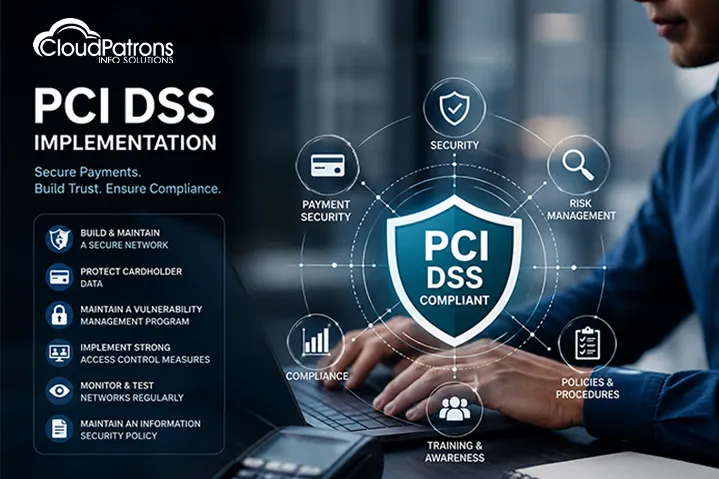
The 12 requirements of PCI DSS compliance cover a broad spectrum of security measures, including building and maintaining a secure network, protecting cardholder data, maintaining a vulnerability management program, implementing strong access control measures, regularly monitoring and testing networks, and maintaining an information security policy. Adhering to these requirements is essential for any organization handling payment card information. Top IT Support Service Provider in India helps businesses understand and fulfill each of these critical requirements.
PCI DSS is implemented by any organization that stores, processes, or transmits cardholder data, regardless of its size or transaction volume. While the standard is administered by the Payment Card Industry Security Standards Council and enforced by major payment card brands, the responsibility for implementation lies with the individual business. Our experts at Top IT Support Service Provider in India assist companies in India with their PCI DSS implementation, ensuring they meet these vital security standards.
While it is technically possible for an organization to attempt PCI compliance on its own, it is a highly complex and demanding process requiring specialized knowledge and resources. Many businesses find it more efficient and effective to partner with experienced professionals. Top IT Support Service Provider in India like cloud patrons info solutions offers comprehensive PCI DSS Implementation services, providing the expertise and support needed to navigate the compliance journey successfully and avoid potential pitfalls.
A PCI DSS compliance checklist is a detailed guide outlining all the necessary steps and controls an organization must implement to meet the standard's requirements. It typically covers areas like network security, data encryption, access control, regular security testing, and incident response planning. Utilizing such a checklist is fundamental for systematically addressing each aspect of PCI DSS. Top IT Support Service Provider in India provides tailored checklists and expert guidance to streamline your compliance efforts.