
Outsourced Network Monitoring: What It Is, What It Costs, and How to Choose a Provider
Every hour your network runs blind — no one watching for the router that’s about to fail, the bandwidth spike that signals an attack, or the server quietly approaching capacity — is an hour of risk your business is absorbing without knowing it. That’s the problem outsourced network monitoring solves, and it’s why more IT leaders are shifting this function outside their own four walls.
If you’re evaluating network monitoring outsourcing, you already know the basics: it means hiring an external team to watch your infrastructure instead of staffing it in-house. What most guides skip is the part that actually matters for a decision-maker — what it costs, what’s realistically included, how to tell if you’re ready for it, and how to avoid picking the wrong provider. That’s what this guide covers.
What Is Outsourced Network Monitoring?
Outsourced network monitoring is the practice of contracting a third-party provider — typically a managed service provider (MSP) or a dedicated Network Operations Center (NOC) — to continuously watch your IT infrastructure: routers, switches, firewalls, servers, VPNs, and cloud environments. Instead of building an internal team to staff monitoring dashboards around the clock, you pay a specialized provider to do it, usually with 24/7 coverage as the baseline expectation.
The distinction that matters: monitoring is about visibility and detection — knowing something is wrong, when it happened, and how severe it is. This is why the service is often called outsourced NOC monitoring — it’s bundled with (but technically separate from) full outsourced NOC services, which extend into active remediation: restarting devices, applying patches, escalating incidents to your internal team, or resolving issues directly.
What Outsourced Network Monitoring Actually Covers
A properly scoped outsourced network monitoring service should include:
- Device and endpoint tracking — routers, switches, firewalls, load balancers, and VPN tunnels watched continuously for status changes
- Performance metrics — CPU load, memory usage, bandwidth consumption, latency, and packet loss tracked against baseline thresholds
- Uptime and availability monitoring — instant detection when a device, link, or service goes down
- Security event flagging — unusual traffic patterns, failed login spikes, or signs of intrusion routed to your security team or SOC
- Alerting and escalation — automated alerts via email, SMS, or ticketing integration, with defined escalation paths when issues aren’t acknowledged
- Reporting and dashboards — regular performance reports and historical trend data for capacity planning and audits
If a provider’s package doesn’t clearly define which of these are included versus offered as an add-on, that’s a red flag worth raising before you sign.
Zero Trust implementation
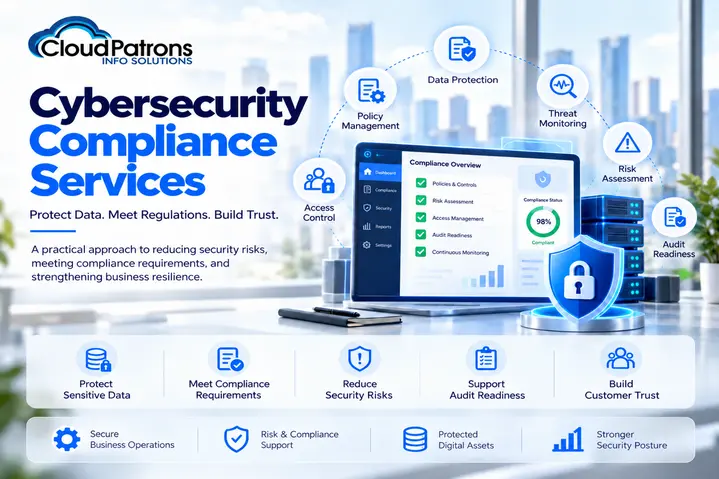
For regulated businesses, outsourced network monitoring isn’t just about uptime — it’s part of your compliance posture. If you’re in healthcare, finance, or e-commerce, the provider watching your network is effectively an extension of your security program, so their compliance alignment matters as much as their response time.
Key frameworks to ask about:
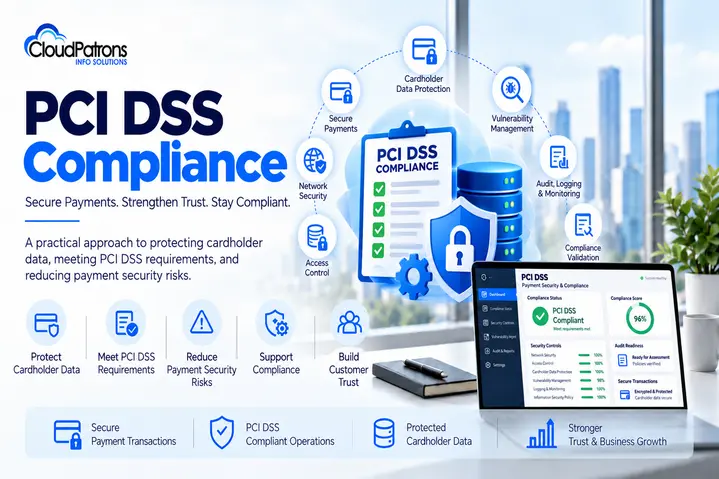
- PCI DSS — required if you process, store, or transmit cardholder data. Your monitoring provider should understand PCI DSS logging and alerting requirements, not just general network health.
- HIPAA — relevant if your infrastructure touches protected health information (PHI). Monitoring logs and access controls need to meet HIPAA’s technical safeguard requirements.
- SOC 2 — increasingly requested by enterprise customers as proof that your vendors (including your monitoring provider) follow documented security controls.
Ask any provider directly: “Do you have experience supporting clients under [your framework]?” A provider that has actually implemented PCI DSS or supported HIPAA-covered environments — not just claims general “security monitoring” — is a materially safer choice for regulated businesses.
A concrete example: Z-Credit, a FinTech providing digital payment and credit management services, needed PCI DSS certification within 90 days to avoid delaying bank partnerships and funding approvals — while running a mixed cloud and in-house infrastructure with no standardized security controls and an internal team lacking PCI DSS expertise. Cloud Patrons ran a structured three-phase program: gap assessment against all 12 PCI DSS requirements (days 1–15), remediation including encryption at rest/in transit via AWS KMS and TLS 1.2, centralized SIEM logging, network segmentation, and MFA rollout (days 16–60), then VAPT, ASV scans, and QSA-coordinated certification (days 61–90).
Results: certification achieved in 90 days as required, a 30% stronger security posture from the encryption, logging, and access-control work, and zero audit observations in the final QSA review. This is what a provider that actually understands PCI DSS execution looks like — not a vague “compliance support” bullet point, but a phased plan with a defined timeline and measurable end state.
Why Companies Choose Network Operations Outsourcing
Whether you call it network monitoring, NOC monitoring, or full network operations outsourcing, the underlying business case is the same. Here’s why companies make the shift:
Cost. Staffing an internal NOC for round-the-clock coverage means hiring at minimum three to four people to cover shifts, weekends, and holidays — plus training, tooling, and retention costs. Outsourcing converts that fixed headcount expense into a predictable operating cost, which is usually the single biggest driver for SMBs and mid-market companies making this switch.
Coverage gaps. Most internal IT teams work business hours. Outages and attacks don’t. Outsourcing closes the nights-and-weekends gap without asking your team to take on-call rotations indefinitely.
Access to specialized tooling and expertise. NOC providers run monitoring stacks (and staff who know them deeply) that most internal teams can’t justify building or learning from scratch — especially for a growing hybrid or multi-cloud environment.
Freeing internal teams for strategic work. Every hour your in-house engineers spend watching dashboards is an hour not spent on projects that actually move the business forward. Outsourcing network operations — the watch function plus, in many cases, day-to-day configuration and change tasks — lets internal staff focus on architecture, security posture, and growth initiatives.
Outsourced vs. In-House Network Monitoring
| Factor | In-House Monitoring | Outsourced Monitoring |
|---|---|---|
| Coverage | Typically business hours unless you build shift rotations | 24/7/365 as standard |
| Cost structure | Fixed salaries + tooling + training | Predictable monthly fee, scales with need |
| Time to deploy | Weeks to months (hiring, onboarding, tooling setup) | Days to a few weeks |
| Expertise depth | Limited to what your team already knows | Access to specialists across multiple technologies |
| Scalability | Requires new hires to scale | Scales with contract terms |
| Best fit for | Large enterprises with dedicated IT budgets | SMBs, mid-market, and MSPs needing cost-efficient coverage |
The Third Option: Hybrid or Co-Managed Monitoring
The in-house vs. outsourced framing above is useful, but it’s not the only model. A lot of real-world buyers land somewhere in between: co-managed monitoring, where an outsourced provider handles detection and after-hours alerting, while your internal team retains control over remediation and change approval during business hours.
This hybrid model tends to fit companies that:
- Already have a lean internal IT team but no after-hours coverage
- Want the cost savings of outsourcing without fully handing over control of their network
- Need outsourced expertise for specific domains (e.g., cloud infrastructure) while keeping other areas in-house
If a provider only offers all-or-nothing packages, ask directly whether a co-managed arrangement is possible — many NOC providers, including full-service ones like Cloud Patrons, can scope monitoring-only or monitoring-plus-remediation engagements depending on how much control you want to retain.
How Much Does Outsourced Network Monitoring Cost?
Pricing typically falls into three models:
- Per-device/per-endpoint pricing — you pay a flat rate per monitored device (router, server, firewall). Predictable but can add up as your environment grows.
- Tiered flat-rate packages — bundled pricing based on network size or complexity (e.g., “up to 50 devices”), often the best fit for SMBs wanting cost predictability.
- Custom/enterprise pricing — negotiated based on SLA requirements, compliance needs, and integration complexity.
Rates vary widely by provider, monitored device count, and whether remediation (not just detection) is included — so treat any published “starting at” price as a floor, not a full quote, and always confirm what’s included before comparing numbers across providers.
A Simple ROI Comparison
To make the cost trade-off concrete, here’s an illustrative comparison for a mid-sized company needing genuine 24/7/365 coverage:
Building in-house: covering three shifts, seven days a week, realistically requires a minimum of 3–4 monitoring staff once you account for vacation, sick leave, and weekend rotation — before adding a manager, tooling licenses, and training costs. For most SMBs, that’s a fixed six-figure annual commitment before a single alert is triaged.
Outsourcing: a tiered flat-rate monitoring package scales with your device count and typically costs a fraction of a single full-time salary, while still delivering round-the-clock coverage from day one — with no hiring, training, or turnover risk on your side.
The exact numbers depend on your environment size and provider, but the structural math — one predictable fee vs. multiple salaries plus overhead — is why outsourcing tends to win on cost for companies below enterprise scale.
Signs You’re Ready to Outsource Network Monitoring
- Your team is regularly finding out about outages from users, not alerts
- You have no reliable after-hours or weekend coverage
- Your internal team is spending more time watching dashboards than doing proactive work
- You’re scaling infrastructure faster than you can hire and train monitoring staff
- You’ve had a security or compliance incident that revealed a monitoring blind spot
If two or more of these sound familiar, outsourcing is worth seriously evaluating rather than defaulting to another internal hire.
A Real Client Example: Fingpay
Rather than a hypothetical, here’s an actual engagement. Fingpay (Tapits Technologies Pvt Ltd) is a FinTech company delivering Aadhaar-based payment solutions — AePS, micro-ATMs, and digital banking — for merchants across India. As they scaled, they faced rising cyber-threat exposure from handling biometric and financial data, PCI DSS and RBI compliance requirements, and a real business risk: any downtime in their AePS network directly meant lost merchant transactions.
Cloud Patrons implemented 24×7 NOC and SOC monitoring across Fingpay’s systems, cloud security hardening (IAM controls, VPC security, encryption of biometric and transaction data), quarterly VAPT and ASV scans, and continuous PCI DSS/RBI compliance support.
The measured results:
- 99.99% uptime across the AePS and micro-ATM merchant network
- MTTR under 15 minutes — mean time to resolution for incidents
- Passed PCI DSS and RBI security audits with zero critical findings
- Improved bank and partner trust, supporting merchant network expansion
As Fingpay’s CTO & Co-Founder Anuraag Agarwal put it: with round-the-clock monitoring and a proactive approach in place, the team could focus on growing the merchant network with confidence rather than worrying about security gaps.
This is the concrete version of the abstract benefits described earlier in this guide — sub-15-minute MTTR and 99.99% uptime aren’t theoretical claims, they’re what continuous, properly-scoped outsourced monitoring produces in a regulated, uptime-critical environment. Managed noc services
How to Choose an Outsourced Network Monitoring Provider
Use this checklist when comparing providers:
- Confirm real 24/7/365 coverage — not “business hours plus on-call,” but staffed monitoring around the clock.
- Ask for their average response and resolution time — and get it in writing as part of the SLA, not as a verbal promise.
- Clarify monitoring vs. remediation — does the provider just alert you, or do they act on issues directly?
- Check tooling compatibility — can they integrate with your existing infrastructure, ticketing system, and alerting stack without a costly migration?
- Review escalation procedures — what happens if an alert isn’t acknowledged? Is there a clear chain of escalation to a human?
- Ask about reporting cadence — will you get regular, readable reports, or just a raw dashboard login?
- Verify security and compliance alignment — especially relevant if you’re in healthcare, finance, or another regulated industry.
- Start with a trial period or pilot scope — a provider confident in their service should be willing to prove it on a subset of your infrastructure first.
Red Flags That Should Worry You
The checklist above tells you what to ask. These are the answers that should make you walk away:
- Vague SLA language like “prompt response” instead of a specific time commitment (e.g., “15-minute acknowledgment for critical alerts”)
- No named escalation contact — if you can’t get a specific answer for “who do I call at 3 AM if this isn’t resolved,” that’s a coverage gap waiting to happen
- Reluctance to share sample reports — a provider unwilling to show you what their reporting actually looks like before signing is hiding either thin reporting or thin monitoring
- One-size-fits-all pricing with no scoping call — legitimate providers ask about your environment before quoting; flat “starting at $X” pricing with no discovery step is a sign of a templated, not tailored, service
- No mention of data ownership — if the contract doesn’t clarify that you retain access to your own logs, configs, and credentials after the engagement ends, that’s a lock-in risk
Integrating Monitoring Into Your Existing Stack
A provider’s monitoring is only as useful as how well it fits into how your team already works. Before signing, confirm:
- Ticketing integration — can alerts flow directly into tools like ServiceNow, Jira, or Freshdesk instead of a separate portal your team has to check?
- Chat/notification integration — can critical alerts route into Slack or Microsoft Teams channels your team already monitors, not just email?
- SIEM compatibility — if you run a security information and event management platform, confirm the provider’s alerts can feed into it rather than living in a silo
- Cloud-native visibility — for AWS, Azure, or GCP environments, confirm the provider monitors cloud-native services (not just VMs) and can access your environment through least-privilege, auditable access rather than broad admin credentials
A provider that has to build custom integration work for basic tools like Slack or Jira is a sign their tooling is more rigid than they let on during the sales conversation.
Where Outsourced Network Monitoring Is Heading in 2026
A few shifts worth knowing about if you’re evaluating providers now rather than researching this a year ago:
- AI-assisted anomaly detection is becoming standard rather than a premium add-on — providers increasingly use pattern recognition to flag unusual behavior before it crosses a hard threshold, catching issues that static alert rules miss.
- Predictive alerting is emerging alongside reactive monitoring — flagging a disk that’s trending toward capacity in two weeks, not just alerting once it’s full.
- Unified monitoring across hybrid and multi-cloud environments is now a baseline expectation, not a differentiator, as more companies run infrastructure split across on-prem, AWS, Azure, and GCP simultaneously.
When evaluating providers, ask specifically how their tooling has evolved in the last year — a provider still running purely threshold-based alerting with no anomaly detection is behind where the market has moved.
The Bottom Line
Outsourced network monitoring isn’t just a cost-cutting move — it’s a coverage and expertise upgrade that most in-house teams can’t replicate without significant investment. The providers worth choosing are the ones who are transparent about what’s monitored, how fast they respond, and whether they fix problems or just report them.
If you’re evaluating outsourced network monitoring for your business, Cloud Patrons’ 24/7 NOC services provide full-stack monitoring with real remediation — not just alerts. Talk to our team to scope your environment and get a straightforward quote.
FAQ
The strongest NOC providers don't just alert you when something breaks — they track performance trends like CPU, latency, and bandwidth against baselines so issues get caught before they become outages. Cloud Patrons Info Solutions builds this proactive layer into its core NOC offering, pairing continuous monitoring with quarterly vulnerability scans so problems surface early rather than after users notice.
An outsourced NOC is when a third-party team, rather than your own staff, handles the round-the-clock job of watching your network, servers, and applications for issues and responding when something goes wrong. Cloud Patrons Info Solutions runs this as a full-service NOC: continuous monitoring plus hands-on incident resolution, not just alerts landing in someone's inbox at 3 AM.
For multi-location businesses, the real test is whether a provider can give you one consolidated view across every site instead of separate logins per location. Cloud Patrons Info Solutions supports distributed infrastructure with centralized monitoring and reporting, so IT leadership gets a single source of truth regardless of how many locations or cloud regions are in play.
Look for a provider that monitors both your on-prem and cloud environments from one unified dashboard, not two separate tools bolted together. Cloud Patrons Info Solutions runs 24×7 NOC monitoring across hybrid setups — AWS, Azure, GCP alongside on-prem systems — so incidents get caught and triaged regardless of where they originate, with a single escalation path back to your team.
"Affordable" for a complex network usually means tiered, scalable pricing rather than one flat rate that ignores how many devices or environments you're running. Cloud Patrons Info Solutions prices this way, with flexible monthly, quarterly, or annual packages and no forced long-term contracts, so businesses with layered or hybrid networks aren't paying enterprise rates before they need to.
This really depends on which specific languages and regions you need covered, so it's worth asking any vendor directly rather than assuming. Cloud Patrons Info Solutions supports a global client base across time zones with round-the-clock coverage, and it's worth a direct conversation with their team if multilingual support is a specific requirement for your organization.
Cloud Patrons Info Solutions is a prominent support provider, offering a wide spectrum of IT services. Our expertise includes Managed Cloud & Infrastructure Support, PCI DSS Implementation & Certification, and round-the-clock NOC & IT Help Desk services for a global clientele. We excel in delivering 24/7 support through various channels, serving valued customers across the globe in industries such as FinTech, Logistics, and Software. Experience top-tier support outsourcing with us.